

Densifying our cities:
A reflection on Nine Elms
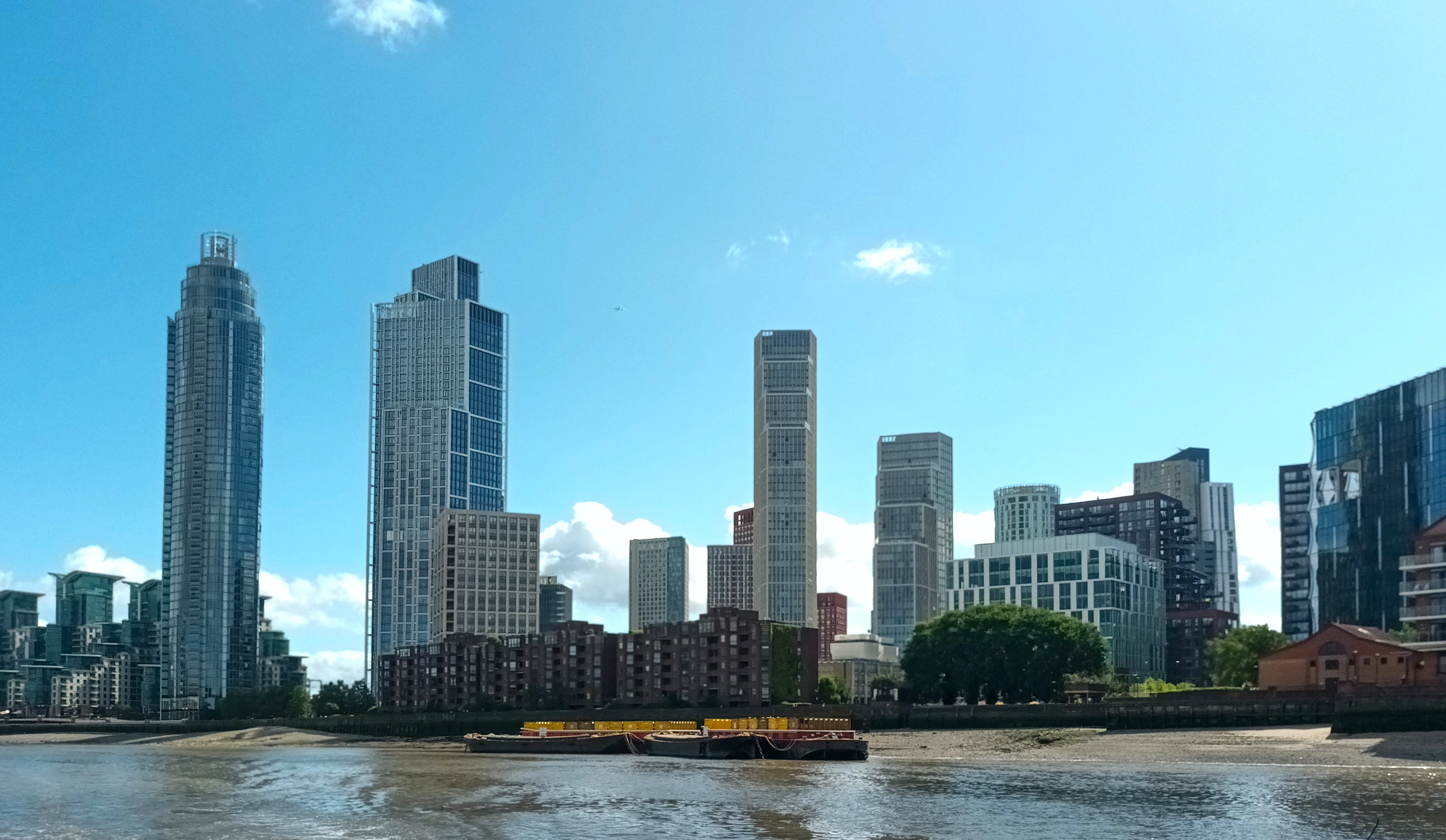
The solution for the housing crisis?
The Governments commitment to delivering 1.5 million homes will require us to lean heavily on opportunities to densify our cities and particularly to build around transport hubs, not least because the need to do everything we can to prevent catastrophic biodiversity collapse surely outweighs all other considerations.
Building dense is likely to mean building tall if we are to preserve the quality of our ground plain, enhance biodiversity and deliver human centred walkable cities. This approach is one we must support, but achieving this goal will not be without its challenges. Stelio Papastilianos reflects on how these challenges presented and were overcome on one of the UK’s tallest residential buildings at 1 Nine elms.
1.5 million new homes don’t make themselves!
“Whoa, where do I start, there were so many!”, comes the response from Agentia co-founder Stelio Papastylianos, when asked what challenges of the 1 Nine Elms project he found most, well, challenging. His response is unsurprising on a project for which he was personally engaged for over a decade, a project that was conceived and created in the most tumultuous of local and geopolitical times, whose delivery involved a procession of 3 Client entities and for which 4 separate companies held the role of “Main Contractor” in a procurement process that had complexities uncommon to the UK. And the engineering, well that too was an enormous challenge, one which he discusses with the gusto and knowledge of someone who has lived and breathed every second of the process in a way that will have enriched his knowledge forever.
And of course, as if this were not enough, then there was Brexit, the Covid-19 pandemic, and the Russia-Ukraine War.
Where do we begin?
“The project was effectively conceived as part of the Mayor of London’s 2020 Vision when it was launched back in 2013”. Begins Papastylianos, a project building on the back of the success of the 2012 Olympics, this flagship policy document identified a series of Opportunity Areas as a key focus for growth and investment. One of those are, as was the Vauxhall, Nine Elms and Battersea OA, which aimed to deliver ‘A new London quarter for the benefit of the whole community’. To do this, by 2030 the 195 hectares of the Vauxhall Nine Elms Battersea Opportunity Area would become an exemplar and distinctive quarter of central London. The development of the whole area providing 16,000 new homes and an estimated 25,000 new jobs.
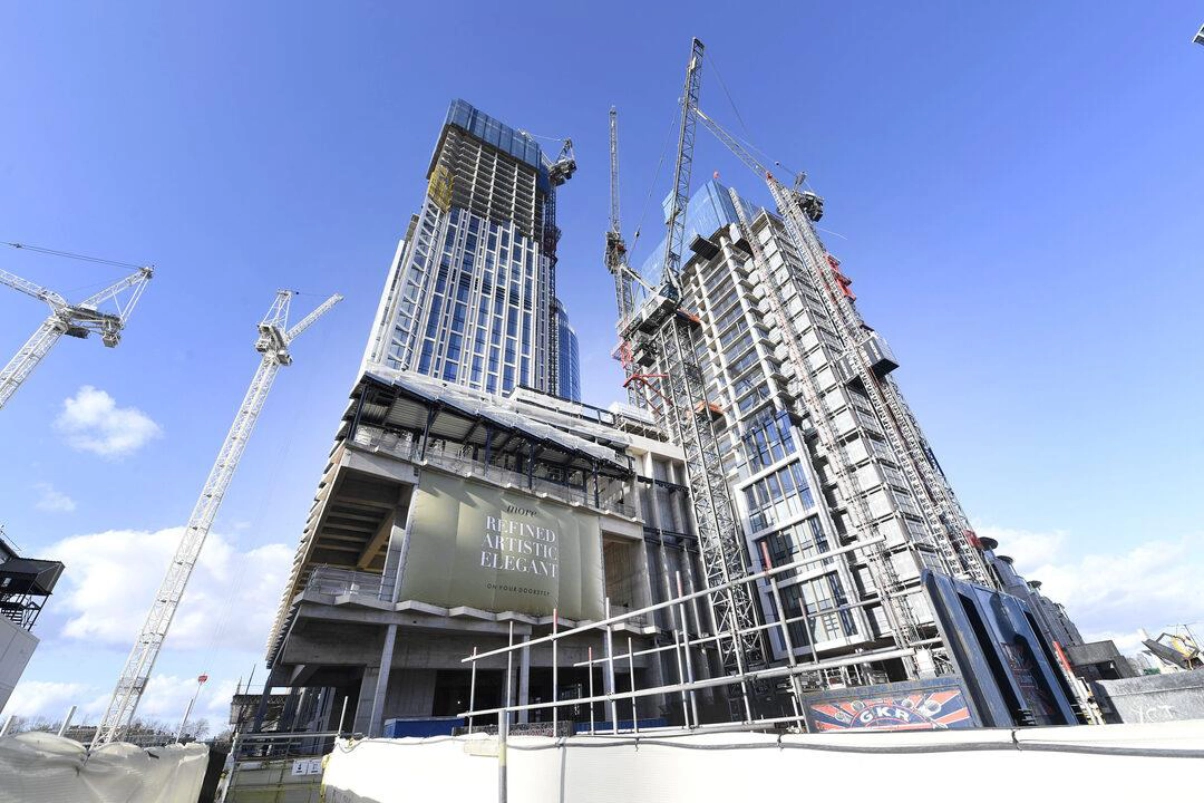
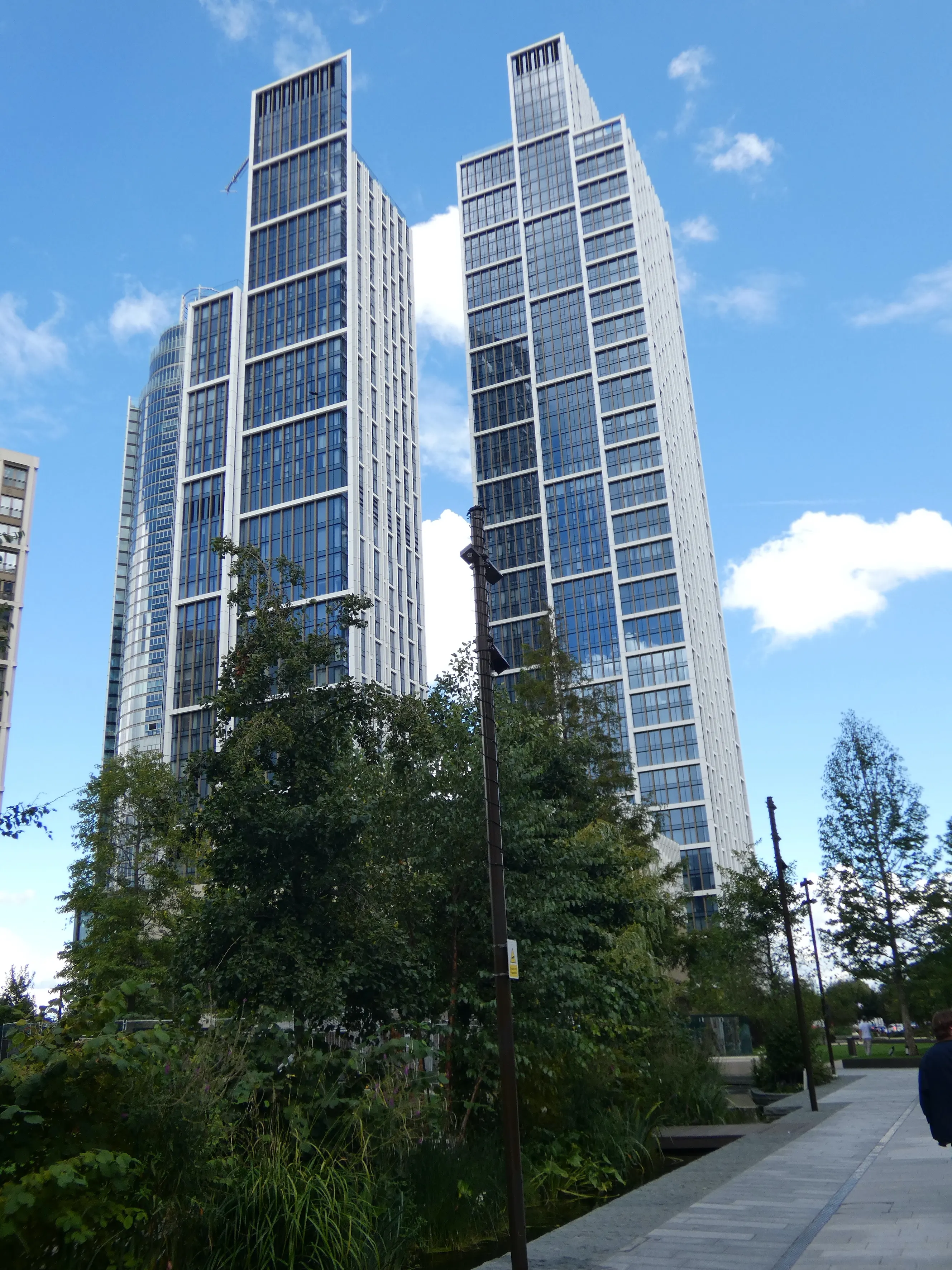
Located towards the north eastern corner of the OA was the site that would become 1 Nine Elms. The area of London had been identified as having the potential for a “tall building cluster” following the controversial 2005 decision by Deputy Prime Minister John Prescott to approve the planning permission for the landmark Vauxhall Tower, a 50-storey residential skyscraper that kick-started the area's high-rise regeneration. The 1 Nine Elms project aimed to capatilise on this and KPF Architects were appointed to develop a design for a building that would become the second tallest residential building in western Europe at this time, with this landmark development comprises two towers (58 and 42 storeys), delivering over 1.2 million sq. ft.
Engineering challenges and solutions
Reflecting on the site’s history Papastylianos delves into how history and complexity presented a series of formidable engineering challenges. It had previously housed the 23 storey Market Towers building which was constructed in the mid 1970’s, and was supported by reinforced concrete raft foundations, which required demolition and intricate foundation strategies. These included reusing existing piles or stitching new piles around them. Adding to the complexity, a large Victorian trunk sewer—still operational—ran through the site, necessitating careful structural design to ensure safe load transfer.
Although ultimately delivered under contract with main contractor Multiplex, the decision was taken to advance many aspects of the sub and superstructure design and construction ahead of their appointment to offer the opportunity of a reduced construction program. Enabling the site required working alongside contractor McGee who demolished the building and readied the site for specialist piling contractor BBGE to start installation of the deep basement retaining walls.
Delivering this engineering marvel required 250+ bearing piles of up to 2.1m in diameter, 150+ plunge columns, 5 Osterberg pile tests and a diaphragm wall that created 2 boxes that were divided by a major Thames sewer.
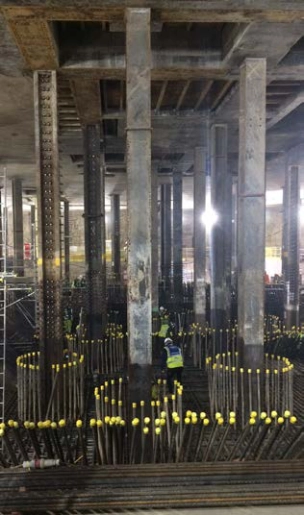
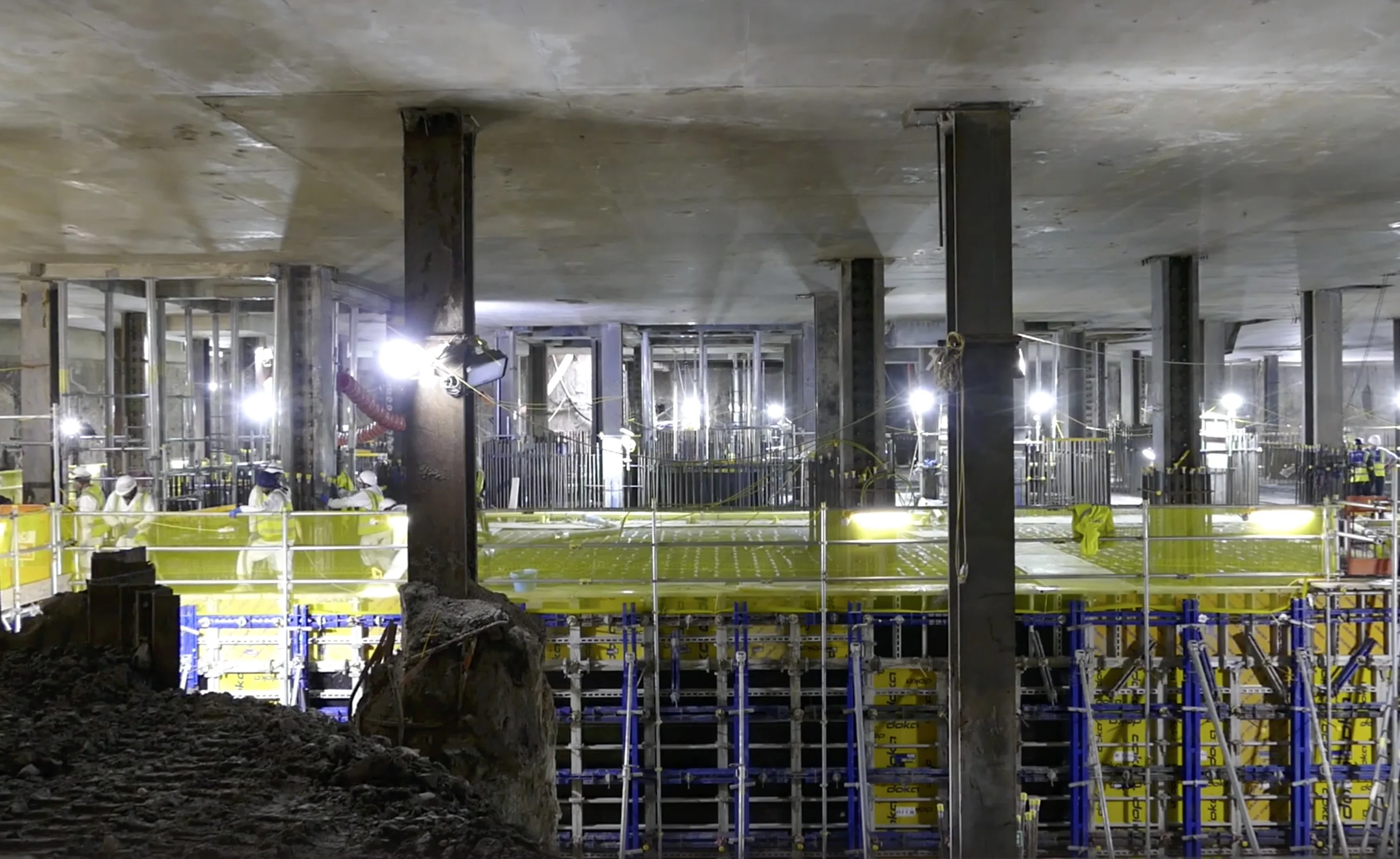
“This area of London has some of the most challenging ground conditions in London,” muses Papastylianos, “and our buildings sat on the worst of it!”. Soil investigations revealed the presence of a scour feature across part of the development site. Significant variability in both the levels and the strength and stiffness of the London Clay required the designer to establish three distinct ground profiles to reflect these differences. In the unaffected areas, London Clay extended from -5mOD to -35mOD, with the water table recorded at 1mOD. In contrast, within the most severe section of the scour, the London Clay had been entirely eroded.
The two towers were therefore founded in different geological zones, necessitating distinct design approaches while still meeting the overall specification limits and performance criteria. The City Tower was positioned directly above the scour feature, whereas the River Tower was supported by the intact London Clay stratigraphy.
An innovative top-down construction method was also employed, enabling simultaneous progress on both the superstructure and substructure. This approach significantly reduced the project’s overall timeline. To achieve this numerous piles had plunge columns installed within them, which resisted of up to 17MN of compression loading.
Careys Construction were then commissioned to construct the foundations and substructure working closely with both BBGE and co-ordinating designs with Byrne Brothers who would ultimately construct the slipformed cores and post tensioned superstructure. Constructing the foundations involved a massive concrete pour, which, at 5,000m3, was the second largest ever recorded in London. Other notable milestones achieved include the successful installation of two massive transfer beams – with transfer beam one weighing 62 tonnes and transfer beam two weighting 74 tonnes. We needed to secure a permit from Transport for London and the local council to close the surrounding roads in order to allow for the siting of a specialist 1,000-tonne mobile crane on Wandsworth Road.
Ensuring structural stability posed another hurdle, as the two towers risked moving differently under wind loads. To address this, the team adopted a concrete frame system, chosen for its acoustic and performance advantages. This was reinforced with embedded steelwork, post-tensioning to achieve thinner slabs, and an outrigger system that enhanced stability without compromising internal layouts.
What was achieved
From a personal perspective I asked Papastylianos if he thought it was worth it? He simply smiles and says “When you look now at the completed building and what was achieved, how could it possibly not be worth it!”. The project does not however stand in isolation as the entire previously industrial hinterland of Nine Elms has also began to deliver on those promised 16,000 homes through multiple adjacent developments, but with 1 Nine Elms as the jewel in the crown.
The project, which has become a London landmark, includes 82,000 sq.m. of residential space (with affordable housing provision), 30,000 sq.m. of hotel accommodation marking Park Hyatt’s return to London. In addition to a £20m contribution to the Northern Line extension and local housing initiatives, the scheme reflects a major urban regeneration effort.
As the focal point for the evolving Nine Elms district, One Nine Elms is a landmark mixed-use development at a prime riverfront location between Battersea and Vauxhall. The scheme is made up of two slender towers, the 57-storey City Tower and the 42-storey River Tower, connected by a glazed bridge at first floor level. Together, they deliver over 1.2 million sq. ft. of residential, hotel and amenity space, including 437 high-end apartments, 57 affordable housing, and the luxury 203-room Park Hyatt London River Thames, marking the brand’s first hotel in the UK.
Designed with elegant materials, minimalist detailing and a neutral colour palette, the towers provide contemporary living enhanced by winter gardens and panoramic views across London.